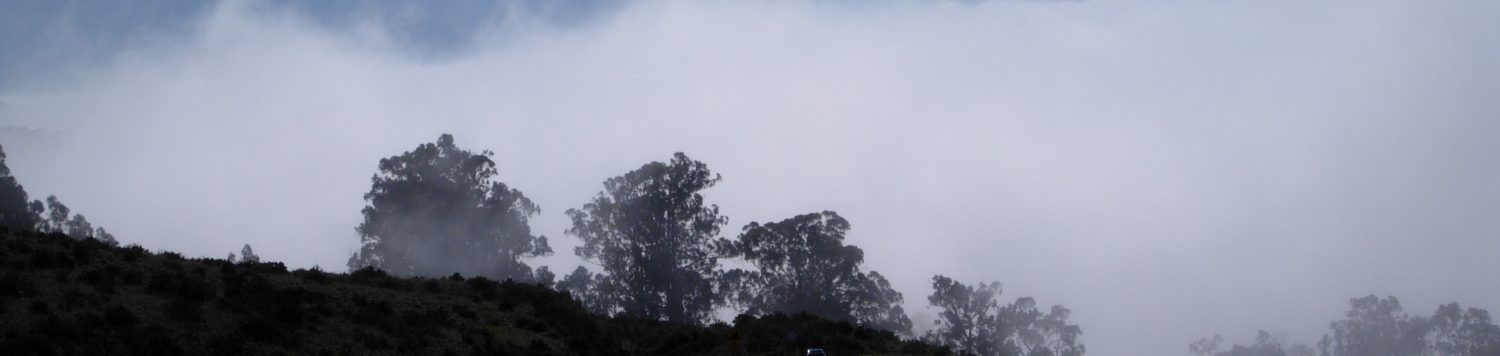

After two nights in Amboseli, we headed back north, past Nairobi, and on to Lake Naivasha. We were scheduled for a boat ride on the lake, which is heavily populated with hippos. I was a bit wary, but figured, well, it’ll probably be a good-sized pontoon boat. Uh, no. More on that in a bit.
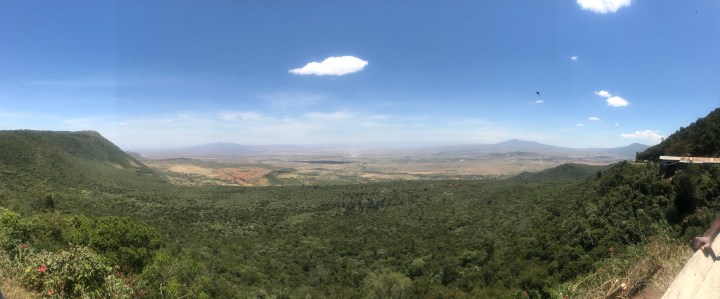
On our way north, we stopped at the Great Rift overlook. The road was planned and engineered by the British during WWII but built by Italian POWs. There’s a small Catholic Church built by Italian POWs here as well.
1. Respect
Along the way, Joseph taught us so many things about these animals he loves so much. Most important is respect. Respect their space. Respect that they may feel threatened. Respect that they can kill you.
As we moved into the Lake Naivasha area, we were fortunate to see a gerenuk—a giraffe gazelle. Its status is near threatened.
We learned that giraffes make no sound…or at least that humans can hear. They use infrasonic communication, which is too low for us to hear. Their best defense is their hooves. The have the same number of teeth as humans (32) and have vertebrae like humans. Giraffes don’t live as long as other animals because of the cardiovascular stress of pumping blood up to their brain. They only sleep about 3 hours/day because they otherwise get blood clots in their legs. They also have an antiseptic in their tongues that nullifies the effects of acacia tree thorns. Acacia are their main food source and the characteristic image of the African plains.
2. Learn
Rhinos. Amazing, almost Jurassic Park-type animals. There are two main types: White and black, with the black being the critically endangered type. I didn’t have high hopes of seeing one this trip because of the intense security around them.
Turns out the white rhino is actually actually the wide rhino because of its wide mouth, but the Africaans language adapted it to white. White rhinos have square/wide mouths, and black rhinos have black lips. I didn’t plan to get that close.
3. Experience
After checking in to the Lake Naivasha Sopa Lodge and having lunch, we headed out for our afternoon game drive. Hippos, here we come! So, the boats. Small. Easy-to-overturn outboard boats. It was just me, Laura, and our guide John. Turns out John is a famous movie star! If you watch “Born Free,” the movie, he’s one of the little boys in a group on the side of a road.
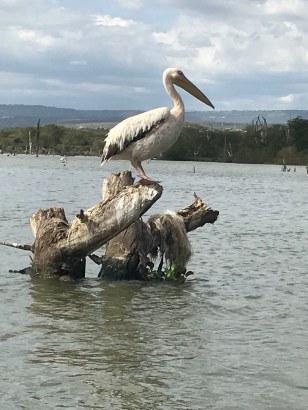
The lake is much bigger than I’d thought. Acacia trees—live and dead—dotted the water close to shore. Turns out colonists thought the trees caused yellow fever and named them yellow-barked acacia.
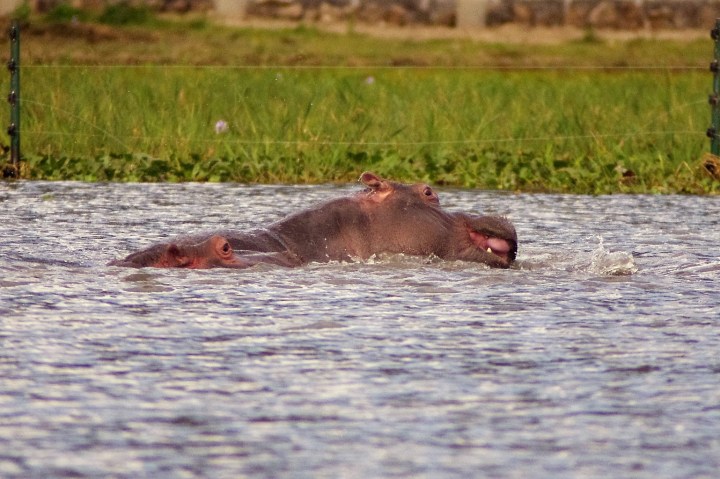
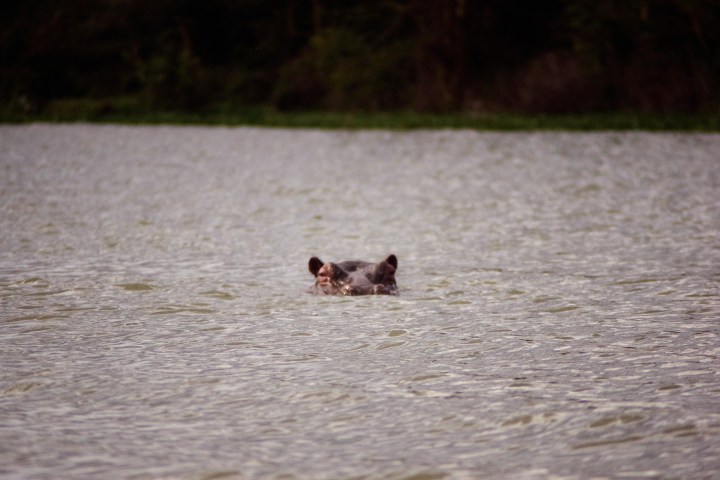
We edged our way over toward the hippos. Once you realize how massive these animals are, you have a new appreciation… or fear. Watching these animals “yawn” was an experience; they can almost open their jaws “flat,” allowing them to wrap their jaws entirely around a human torso, for example. Gah!
Hippos hang out in the water all day, keeping cool. After dark, they come up on land to graze. They’re vegetarian and only attack humans or other animals when threatened. Don’t be fooled into thinking they’re slow, lumbering beasts. They may be huge, but are mostly blubber, which allows them to float. On land, their little legs carry them amazingly fast in a bouncy run. Not much chance of outrunning them.
After the hippo visitation, we boated over to Crescent Island. All kinds of animals live there, including zebra, steenbok, Masai giraffes, and a host of bird species. It was a beautiful afternoon and the water was calm. If I had it to do over, I would have signed up for a guided walk on the island.
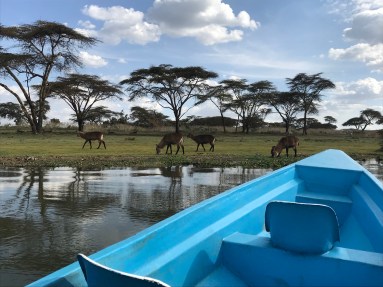

We drove back to the Sopa Lodge, which is right on Lake Naivasha, another hippo haven. The lodge’s grounds are home to zebras, giraffe, and waterbuck. They are not tame and not fed by the staff. Still, they seem to tolerate people somewhat close to them.
We went to dinner, with the staff reminding us that we needed a security guard to walk us back from dinner. We were walking with the guard when he nonchalantly pointed out a large hippo with his flashlight. It was quite close, but with it being nighttime and the hippo being so dark, we wouldn’t have seen it. It was a bit shocking!
We watched through the floor-to-ceiling windows as a family of giraffes sauntered into the park—very tall father, mother, and young one. Parents kept watch while baby rested on the ground. Many hippos were around, not far from the young giraffe. We were seemingly more stressed about the young giraffe than the parents were; but of course that’s not so. The animals didn’t squabble or seem nervous around each other. We watched the interaction for some time. Zebras calling/barking to each other—sounds like barking and somewhat like a donkey at the same time. Also, many stately waterbuck were resting nearby. It was fascinating!

4. Appreciate
We started out the next day for our Lake Nakuru day game drive. What an array of wildlife! We saw the Rothschild giraffe, which is differentiated from other giraffe by its white feet.
Zebra, impala, gazelle (both Thompson’s and Grant’s), eland, water buffalo, and waterbuck. Amazingly, we saw a newborn waterbuck, still wet, with its umbilical cord still attached. Joseph said this little one was perhaps an hour old.
We also saw the dik dik, named for the “seek seek” sound it makes. It’s the smallest gazelle in the world and is very loyal; it will often die soon after its partner does.
Most amazing was seeing SEVEN white rhino. First was a group of five, then later, a male and female crossing the road. The female stopped in front of our vehicle, facing us straight on, and staring us down. Intimidating!
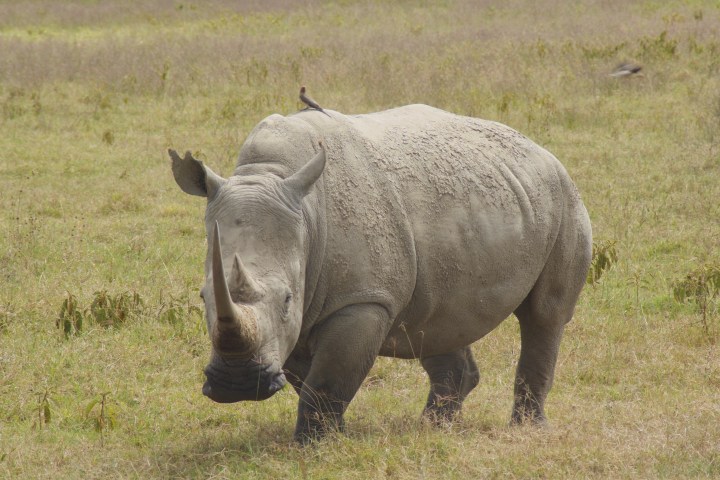
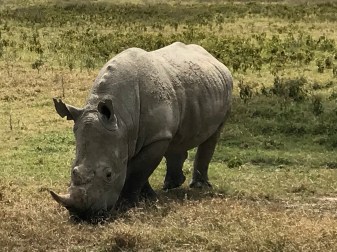

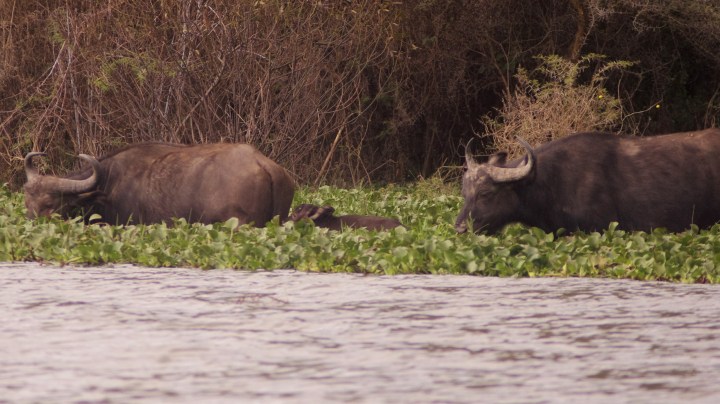
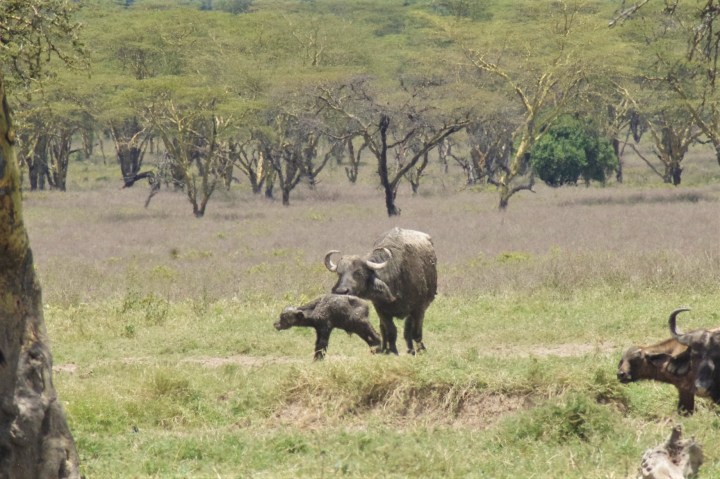
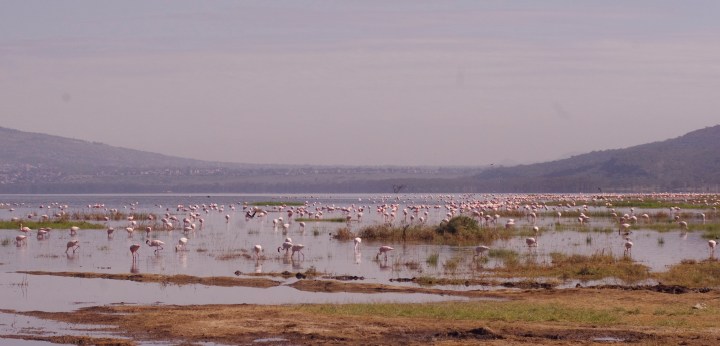
We saw secretary birds and a hammerkop. We went to see the hundreds of flamingos when the herd of water buffalo near us stampeded. You never want to hear your guide say, “Let’s go! Let’s go! These animals are dangerous!” We ran back to our vehicle, with a Land Cruiser running interference. Heart rate up much?
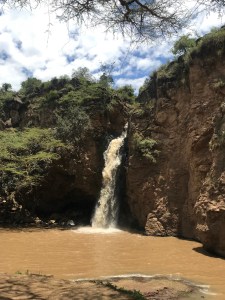
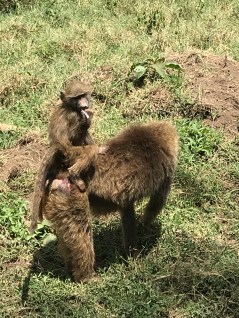
We took a break at the Makaria waterfall for a picnic lunch. Baboons joined us. Not a sentence I ever thought I’d write.
Did you know?
- Kazuri means small
- Twiga means giraffe
- Tafadhali means thank you
 Rhodio