
We were fortunate to have two more full days in Maasai Mara. And they were pretty much cat days—lions, serval, leopard, cheetah.
Lions
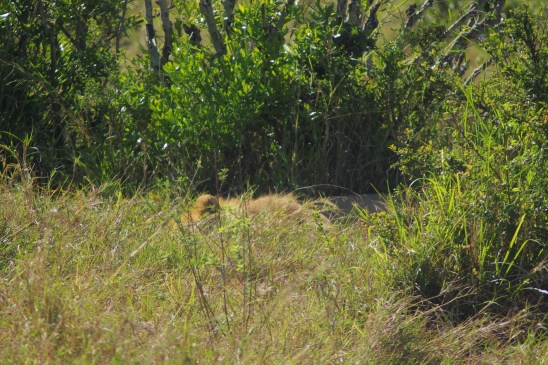
First we saw a large male lion (or rather Joseph saw it and pointed it out to us), sleeping next to shrub. We could really see its ear only; once again, we were amazed at how Joseph can see these animals amongst the grasses.
We next saw a male and female pair walking in the tall grass. The male had a striking black-mane; we could only pick him out when the wind blew. His mate lay in the grass to the right of him; as we’d seen before, the female is the one who chooses when to move. The male follows. They went to lie under a shrub for some shade.
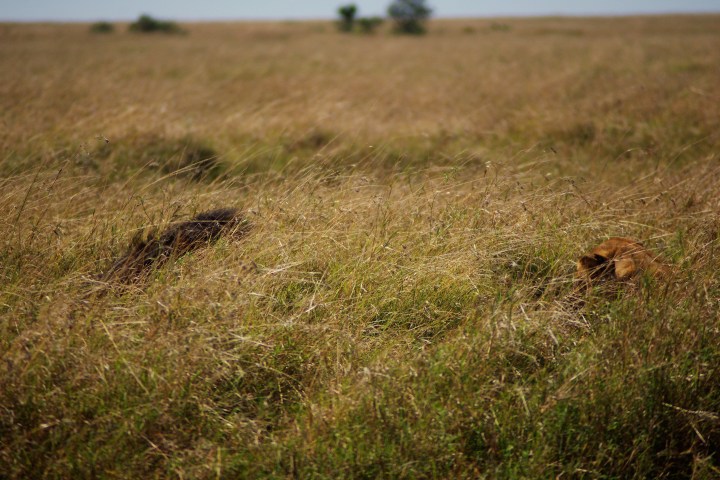
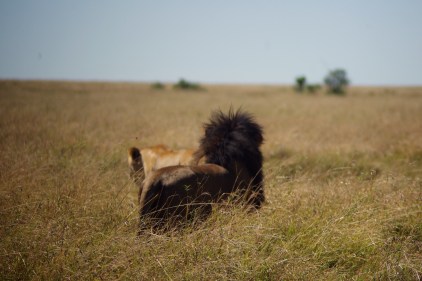
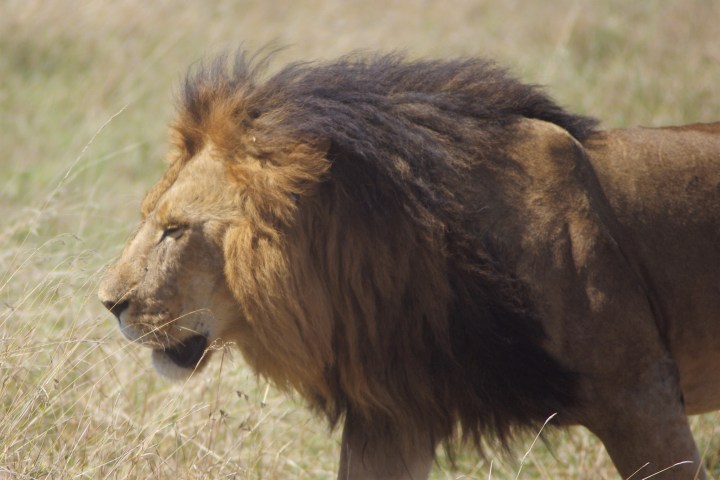
Yet further along we saw two males with a wildebeest kill; they were full and sleeping in the sun. These two were apparently brothers or “cousins” because they would not otherwise hunt together or share the same territory. It’s likely that they either had not fought for the alpha spot in the pride or had both lost.
The male on the right had a wound above its eye. I admit I hadn’t thought about lions getting wounded in the hunt before. Of course, it makes perfect sense as it’s a brutal process; nonetheless, I was surprised to see these animals with injuries.

Leopard!
An exquisite female leopard walked along a ravine and then crossed the road right in front of us. She was a bit easier for us to pick out because of her white tail, which is always carried up.
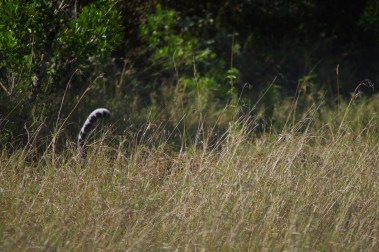
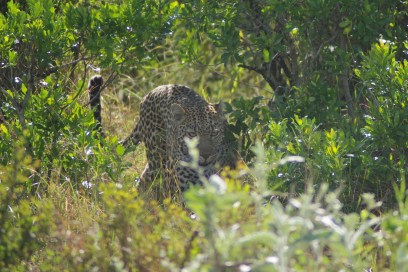

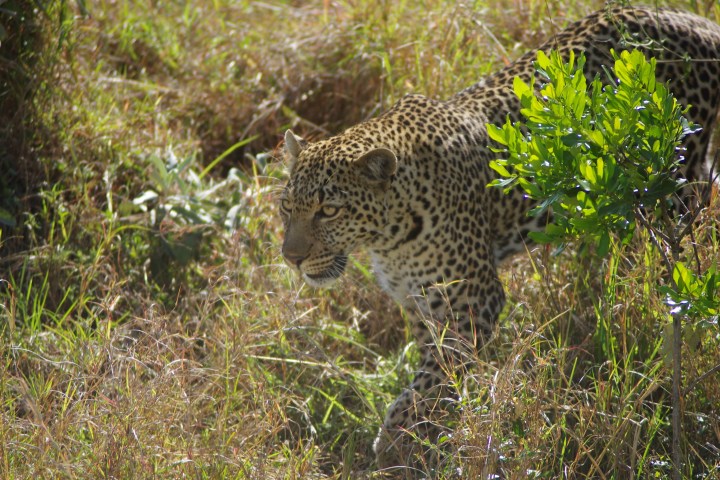
Leopards can carry three times its weight in prey to carry up a tree and hunts at night or early morning. The picture below was taken on a previous day, but shows the leopard’s strength, being able to drag a wildebeest up a tree.

Cheetah!
A few kilometers away, under a tree, was a cheetah.
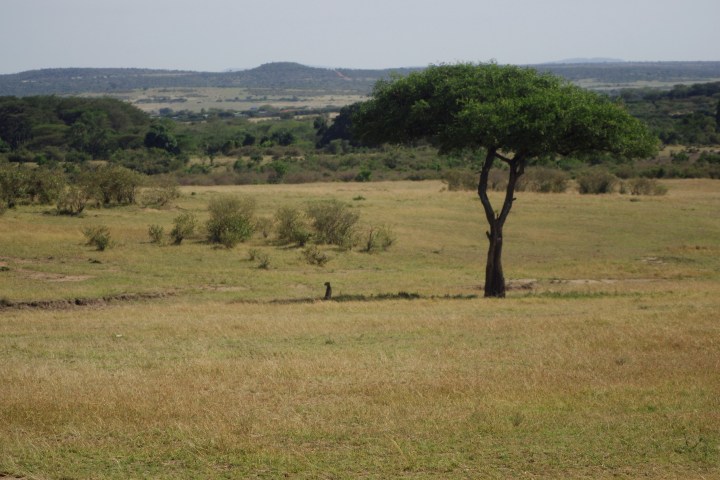
I was fortunate, I’d seen a cheetah before, not in the wild, but as part of an educational program through the Cincinnati Zoo. In my previous life in the theatre, in the off-season from the Cincinnati Theater, I was working as a stage manager at Kings Island. My facility hosted the “show and tell” segment of this education program for elementary school kids. The head of the big cat program first took her house cat out onto the stage. She held her microphone up so everyone could hear her cat purr.
During her chat, I was offstage and felt someone bump into me. Then I felt it again. When I looked down, I was looking into the beautiful face of a cheetah. Right next to me. In the surreal moment, I noticed both her striking tear marks and my fear. Although she had a handler, she both terrified and awed me.
Shortly after, the cheetah was led out to the stage (after the house cat had left!). Again, the head of the big cat program held her mic against the cat…it was purring. I later learned that cheetahs do not have a larynx and therefore cannot roar, but they can purr.
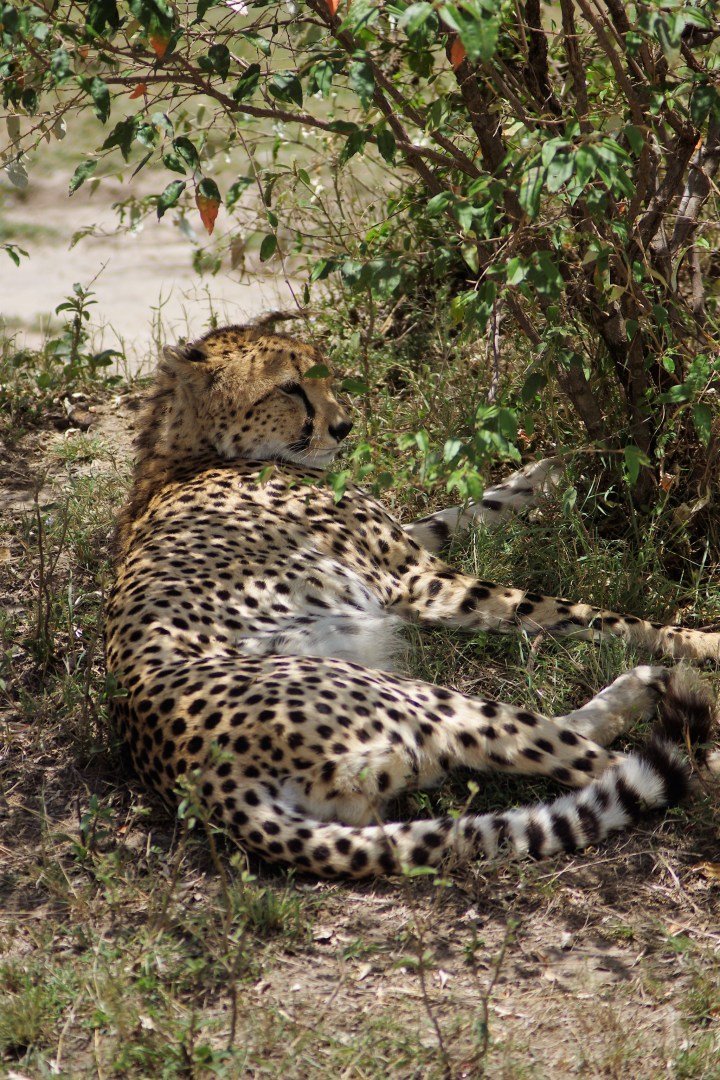
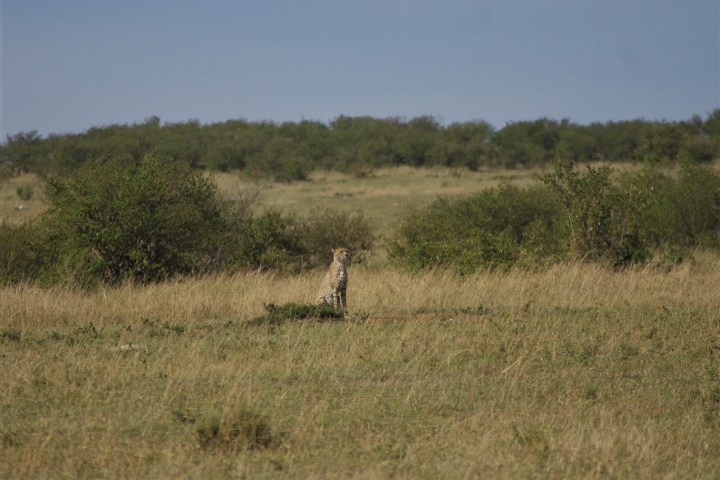 Unlike other cats, cheetah can hunt during the day only because they do not see well at night.
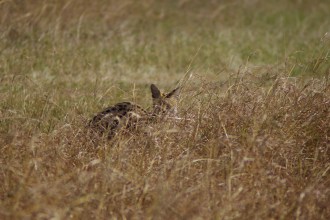
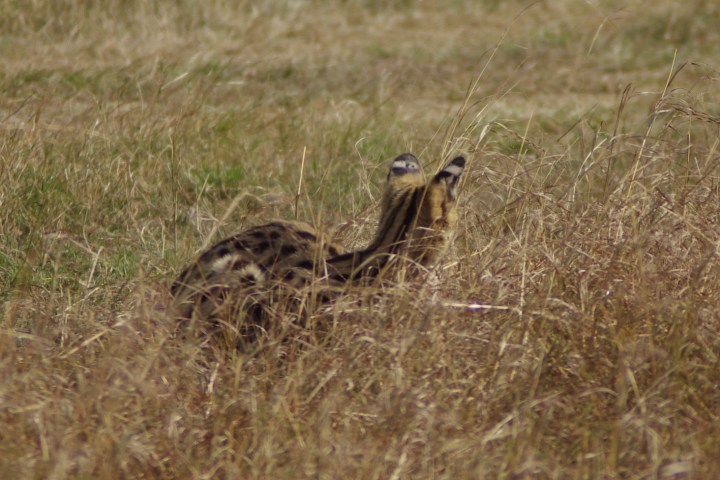
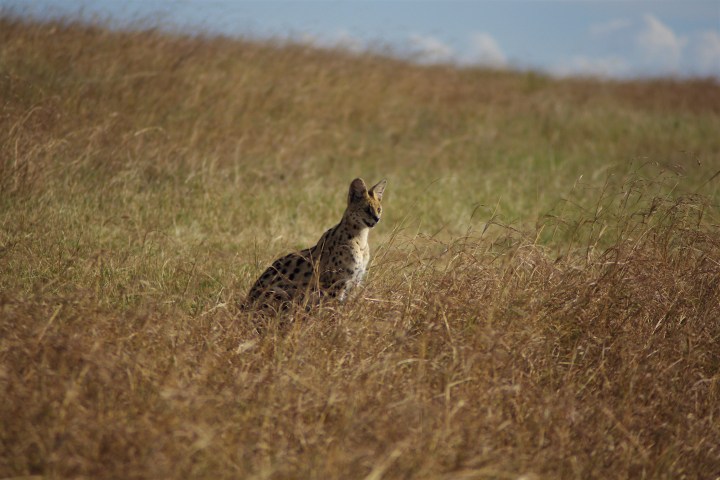
On a much smaller scale, we saw a meerkat. And a stunning serval.
We did get to the River Mara, site of the famous river crossing of the Great Migration. A few zebra were in the North side, but ha huge group of zebra and wildebeest were in our side. The zebra were agitated and braying. They have a unique sound; listen to it here. Joseph heard through the radio that when crossing the Mara, a crocodile had gotten one of the zebra. The braying was a warning to other herd members not to cross.
 Rhodio