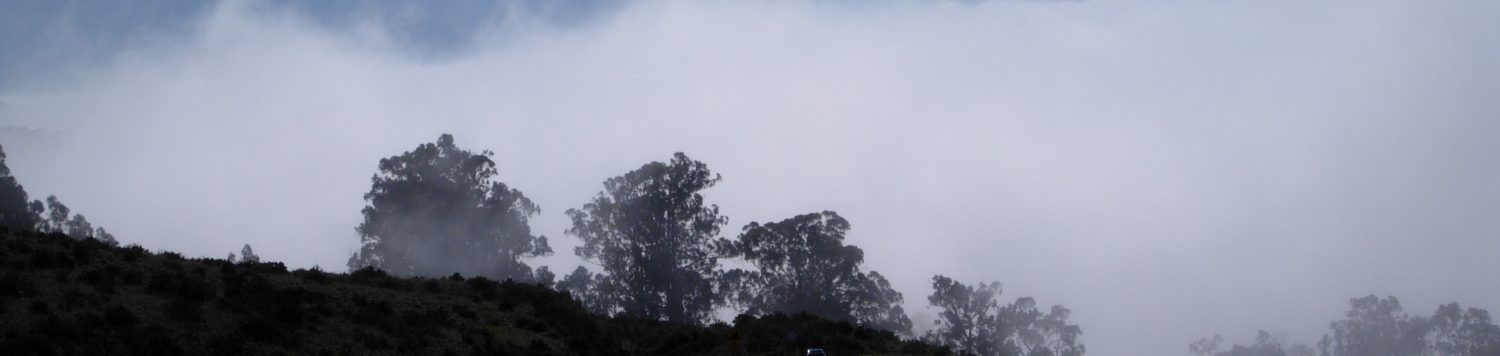
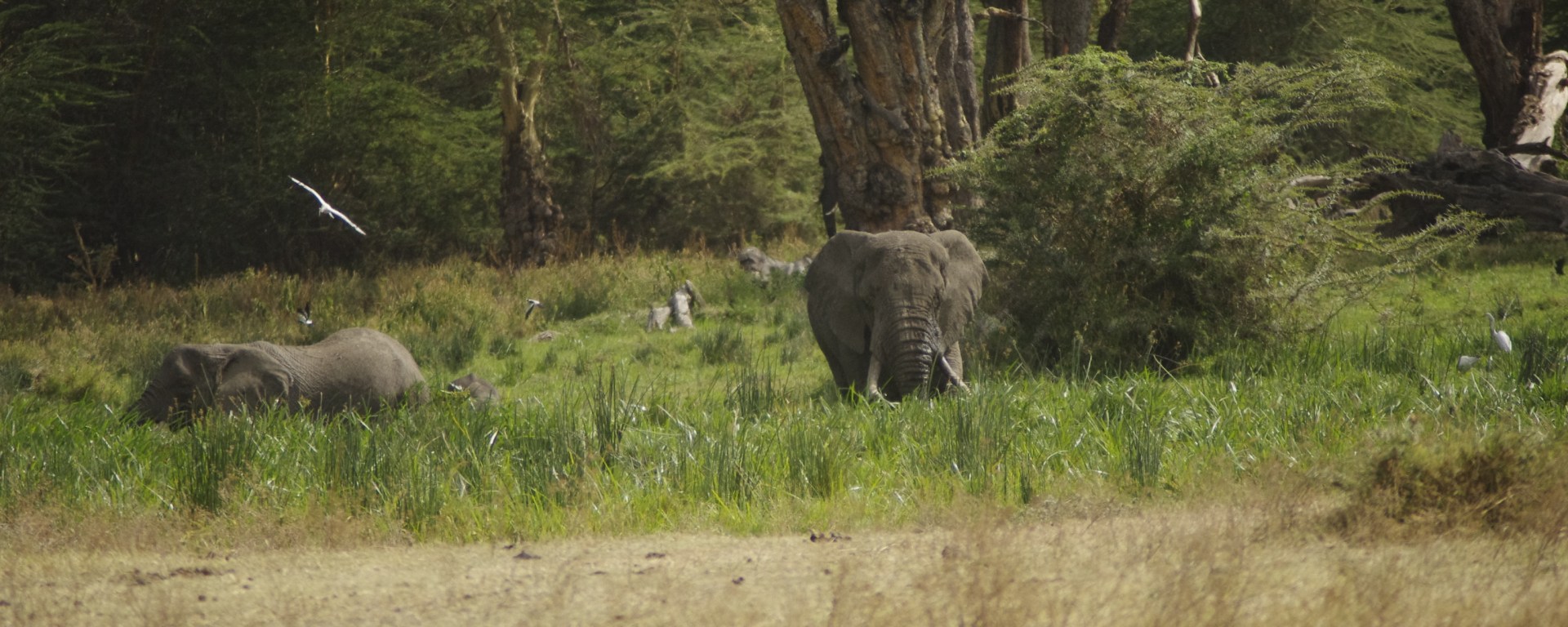
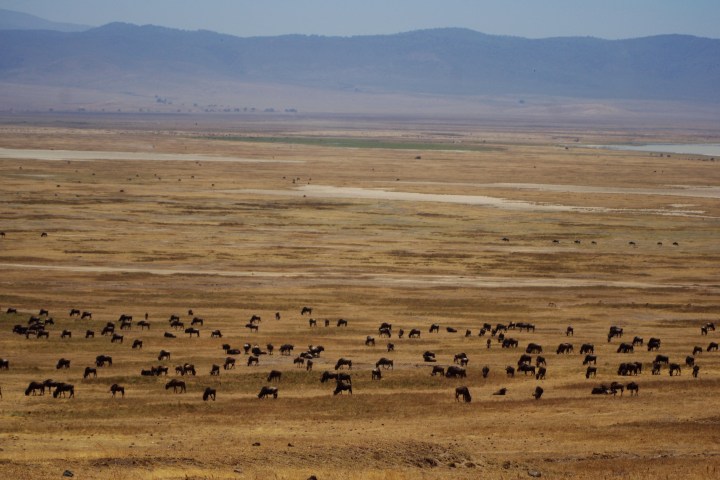
 It was hard to imagine an extinct caldera that was more than 15 miles wide and somehow housed elephants, lions, wildebeest, zebras, and many other animals — a microcosm of the animals that lived “outside.” It’s also a UNESCO World Heritage Site, site of the Leakeys’ research, and a stunning mix of grasslands, rain forest, lakes, trees, and dusty ground.
The volcano that created the caldera was one of several in the East African Rift, including the still-active Ol Doinyo Lengai (Mountain of God in Maasai), Empakaai Crater, and Olmati Crater. The crater was believed to have blown about 2–3 millions years ago. The lakes surprised me for some reason. But there are two of them, both alkaline soda lakes, are called Lake Ndutu and Lake Masek.
Not inside the crater but within the Ngorongoro Conservation Area, is Olduvai Gorge, where the Leakeys made their discovery of a 1.8-million-year-old skeleton (Australopithecus boisei). More info can be found here.
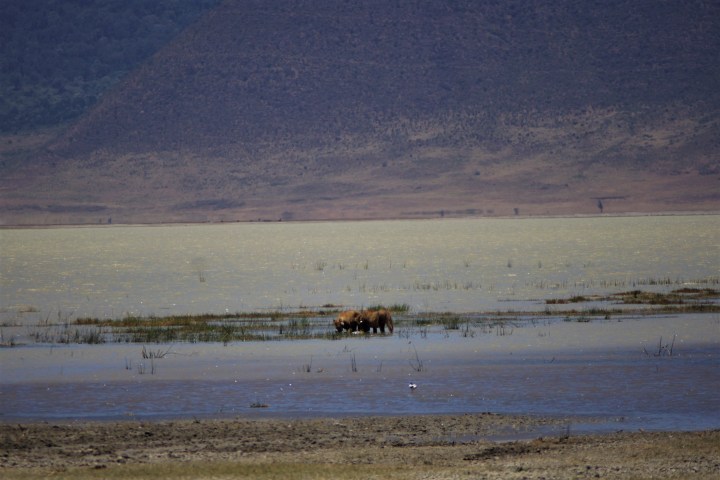


Two lions were eating something they had killed; we were too far away to see what (which was just fine with me). I knew tigers liked the water, but I thought it was unique to see lions standing in water, regardless of the reason.
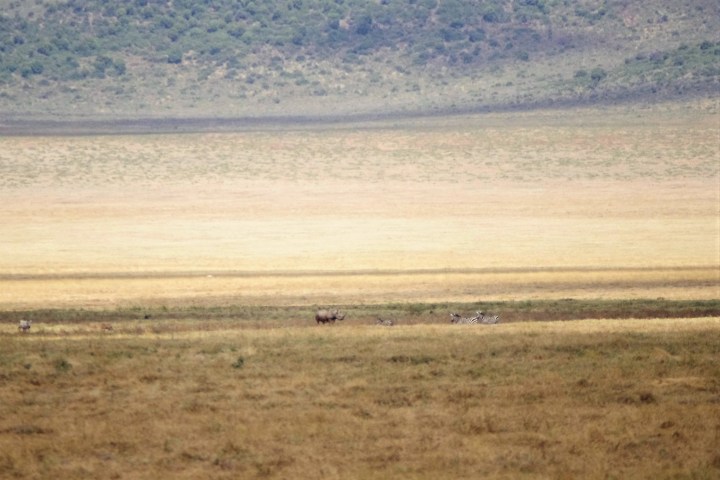
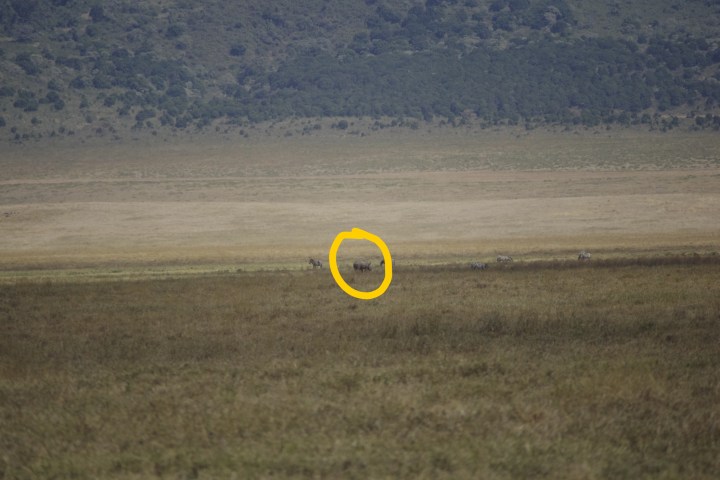
We saw two extremely rare species—the African wild dog and a black rhinoceros. Both were so far away I could only really see them with binoculars; my camera lens wasn’t much help. We’d been told that these dogs were being exterminated, primarily because of their cruel way of hunting and killing.
I feel so humbled and grateful to have seen this magnificent animal, so mercilessly hunted, in the wild. The same fate is befalling the Sumatran black rhino. There are several organizations around the world that work hard to save these beasts; please consider donating. Here are a few organizations: Save the Rhino, World Wildlife Fund, Bisbee’s.
 Rhodio